How the body reacts to drugs
All drugs, man-made and natural, are foreign substances to the body, by definition. The body has mechanisms to deactivate and eliminate foreign substances. Drug design and administration takes this into consideration.
A drug is a chemical agent that is safe and effective in treatment of a disease. That is the working definition among scientists, and why the process of creating new drugs is often called “drug discovery” as opposed to “drug invention”. The new drugs are indeed invented on some level, but rational design (another trend among drug developers) goes only so far. It is not analgous to designing a mechanical device, and all new drugs must be tested to prove they are safe and effective. A safe chemical that doesn’t do anything is not approved by the regulatory authorities.
Drugs often become less effective over time because the liver adjusts.
More metabolizing enzymes in the liver form to combat the foreign
substance drug. In the old days when drugs were often derived from
plants they were harder on the body because in addition to the active
substance, other plant chemicals were included and these were often
mild poisons. Even if the active ingredient were purified, the quantity
of the drug was large and massive enzyme reaction in the liver was
produced. Modern drugs get around this bodily reaction by 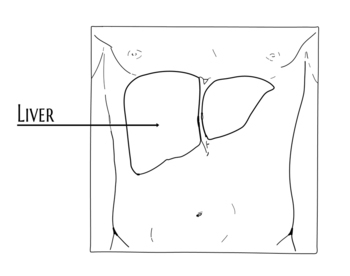 being much
more potent. The old drugs required that about a gram be taken every
day while dosages on new drugs are 100 to 1000 times lower.
being much
more potent. The old drugs required that about a gram be taken every
day while dosages on new drugs are 100 to 1000 times lower.
There are concerns that drinking alcohol while taking statins may put a high burden on the liver. Statins elevate the levels of certain enzymes in the liver and excessive alcohol consumption exacerbates that elevation. Liver damage is always a concern of doctors who prescribe statins, among other side effects.
The other major organ responsible for fighting foreign substance is the kidneys. Some drugs are excreted unchanged in the urine. The kidneys recognize acidic or alkaline materials and remove them. Fat-soluble substances have a longer residence time inside the body because they are removed from the bloodstream into fatty areas and slowly diffuse outward over time.
The composition of the pills.
The typical dosage of a statin drug is under 100 mg per day. It's different for different drugs and different patients - your doctor will tell you the best dosage for you. But the actual pill you swallow is much larger than 100 mg. That's because the dosage of the active drug is so small. Most of what is in that pill is inactive filler: starches, oils, etc. Different manufacturers use different formulations. All statins on the market are in pill form. These drugs are not typically delivered by injection or skin patch. Further, unlike some slow release medicines, statin pills are not formulated to dissolve particularly slowly or over time. Slow release medicines are employed when the serum levels of the drug are important to control over time. This is not an important consideration in statin usage.
Will statins be available over-the-counter in the future?